Viktor Griffin · 16 September 2026
Suburban Seed Exchanges Quietly Boost Local Biodiversity While Cutting Household Grocery Bills
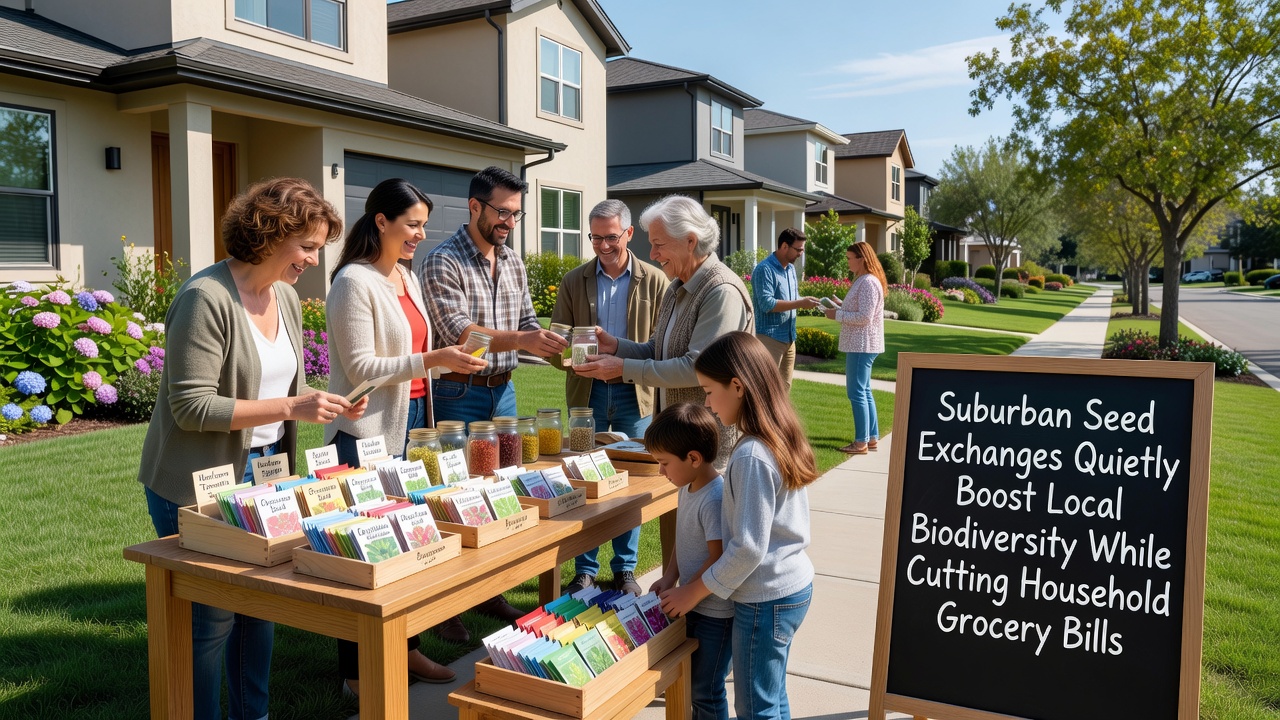
Suburban seed exchanges have expanded steadily across North America and parts of Europe since the early 2020s, and observers note that these informal networks now operate in hundreds of neighborhoods each season. Participants gather to trade packets of vegetable, herb, and flower seeds that have performed well in nearby yards, which allows gardeners to access varieties adapted to local soil and climate conditions rather than relying solely on commercial suppliers. Data from regional agricultural extensions indicate that such exchanges preserve genetic diversity by circulating heirloom and open-pollinated seeds that commercial markets often overlook, and this circulation supports pollinator habitats because many exchanged plants produce flowers or seed heads that attract bees and butterflies throughout the growing season.
How Local Networks Operate
Residents typically organize exchanges through libraries, community centers, or online neighborhood platforms, and meetings occur once or twice a year with rules that emphasize non-hybrid seeds to maintain viability for future saving. In September 2026 several Midwestern and Pacific Northwest groups reported record attendance as households prepared fall plantings of garlic and cover crops, and organizers tracked participation through simple sign-in sheets that later fed into county extension reports. Those who attend often bring surplus seeds from their own harvests along with notes on germination rates and pest resistance, which creates a shared knowledge base that reduces duplicate purchases and encourages experimentation with crops suited to microclimates within the same suburb.
Biodiversity Gains Documented by Researchers
Studies conducted by university horticulture departments have measured higher plant species richness in neighborhoods with active seed exchanges compared with similar areas that rely only on big-box garden centers. Local adaptation means fewer inputs of water and fertilizer because selected varieties already tolerate regional drought patterns or heavy clay soils, and this efficiency extends to reduced chemical use that benefits soil microbes and ground-nesting insects. A report issued by Agriculture and Agri-Food Canada in 2025 linked community seed saving to measurable increases in beneficial insect populations, while parallel findings from the European Environment Agency highlighted similar trends in peri-urban zones where gardeners traded Mediterranean herbs and drought-tolerant greens.
Household Savings Add Up Over Time
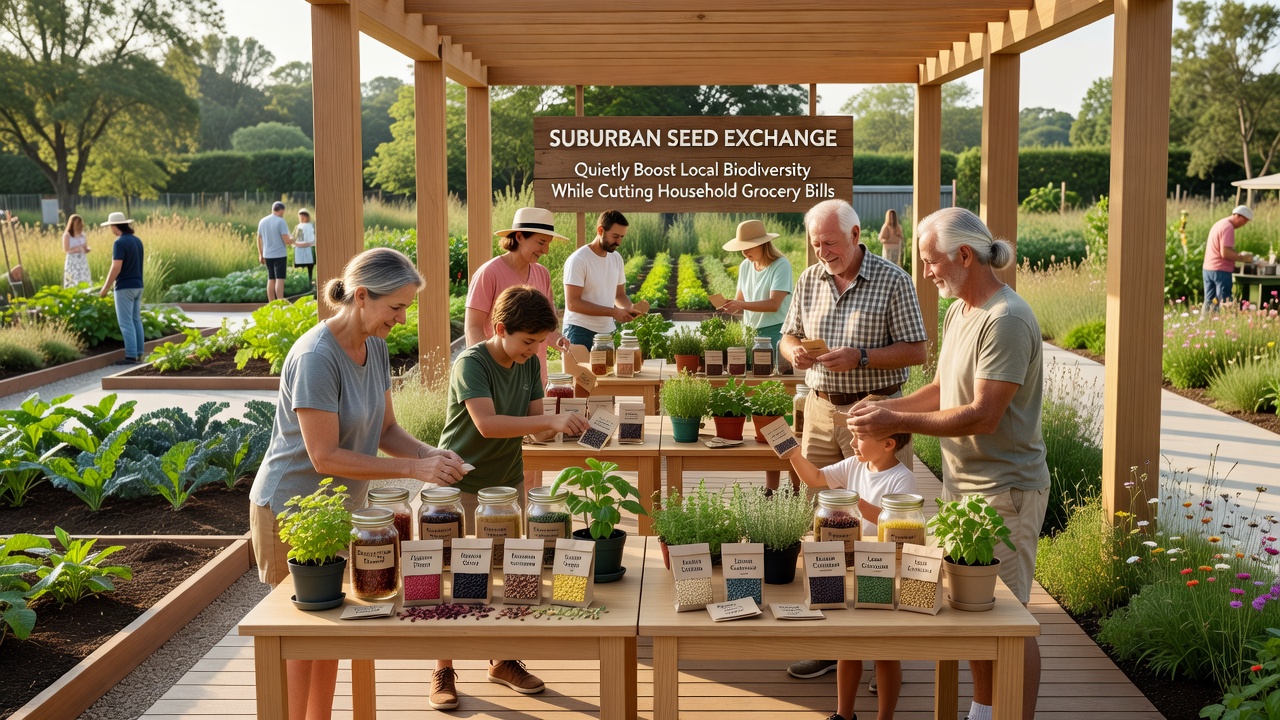
Households that start with exchanged seeds and then save a portion of each harvest can cut annual produce spending by several hundred dollars according to budget analyses from cooperative extension services. One documented case in a Colorado suburb showed a family of four replacing weekly grocery purchases of salad greens and cherry tomatoes with home-grown equivalents after three seasons of participation, and the initial investment remained under twenty dollars because seeds came through trades rather than retail racks. Over repeated cycles the cumulative effect compounds because saved seeds eliminate recurring seed costs, and surplus produce can be preserved or shared, which further lowers food budgets while diverting organic waste from landfills through home composting systems tied to the same gardens.
Regional Variations and Participation Trends
Exchanges in arid Southwest communities emphasize drought-hardy beans and amaranth that originated from Indigenous agricultural traditions, whereas Northeast groups focus on cold-tolerant brassicas and root crops that extend the short growing window. Participation data collected by state master gardener programs show steady growth among younger families who cite both environmental concerns and rising grocery prices as motivators, and many exchanges now include educational workshops on seed cleaning and storage techniques that keep the cycle self-sustaining. Observers note that these networks also serve as informal plant-health monitoring systems because participants compare notes on emerging pests or diseases, allowing earlier collective responses than isolated gardeners might achieve alone.
Conclusion
Seed exchanges continue to scale quietly through suburban networks that connect residents with locally adapted plant material while delivering measurable reductions in household food expenditures. Continued documentation by agricultural agencies and university researchers will clarify long-term biodiversity contributions, yet current figures already demonstrate consistent patterns of increased variety and cost savings wherever these exchanges operate on a regular schedule.