Klara Zimmermann · 30 September 2026
Historic Eco-Restorations in Urban Neighborhoods Now Include Dedicated Pet Zones That Correlate With Owner Wellness Data
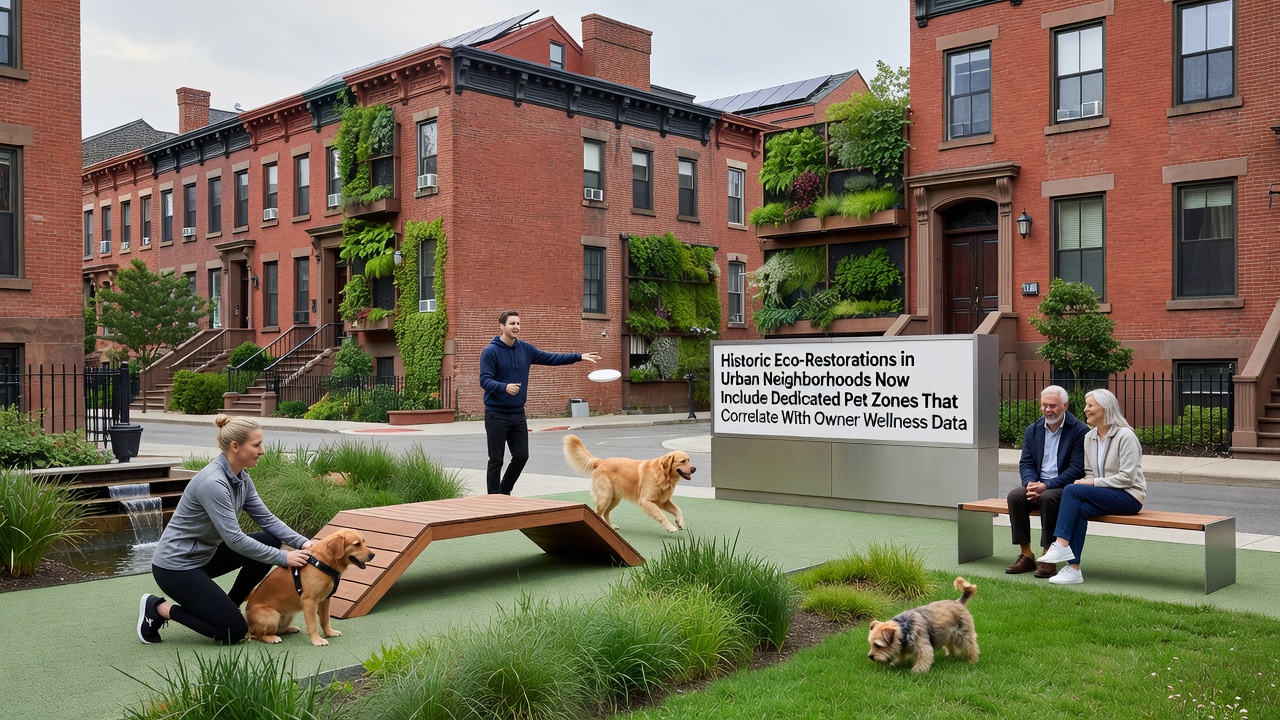
Urban neighborhoods across multiple continents have incorporated pet zones into longstanding eco-restoration projects, and data collected from wearable devices plus municipal health records show measurable links to owner wellness metrics. These zones emerged from earlier restoration efforts that focused on native plantings, stormwater management, and habitat corridors, yet recent additions allocate specific acreage for off-leash areas, agility equipment, and shaded seating that accommodate both pets and their handlers. Cities such as Portland, Melbourne, and Copenhagen began retrofitting 19th-century industrial corridors in the mid-2010s, and by September 2026 several districts reported completion of phase-three expansions that formalized the pet components after pilot programs demonstrated reduced stress markers in participating residents.
Origins of Eco-Restoration Projects in Dense City Blocks
Restoration teams initially targeted brownfield sites and disused rail lines where soil remediation and biodiversity planting took precedence, while planners later observed that residents walking dogs formed the most consistent user group for new green corridors. Municipal records from the US Environmental Protection Agency document more than 1,200 acres of urban land restored between 2018 and 2024, and similar figures from Australia's Department of Climate Change, Energy, the Environment and Water indicate parallel investments in Sydney and Brisbane. Those early designs emphasized pollinator gardens and tree canopies, yet feedback loops from neighborhood associations prompted the carving out of fenced pet sections that prevented conflicts with ground-nesting birds and allowed controlled composting of animal waste into the same nutrient cycles used for native plant beds.
Design Elements That Define Dedicated Pet Zones
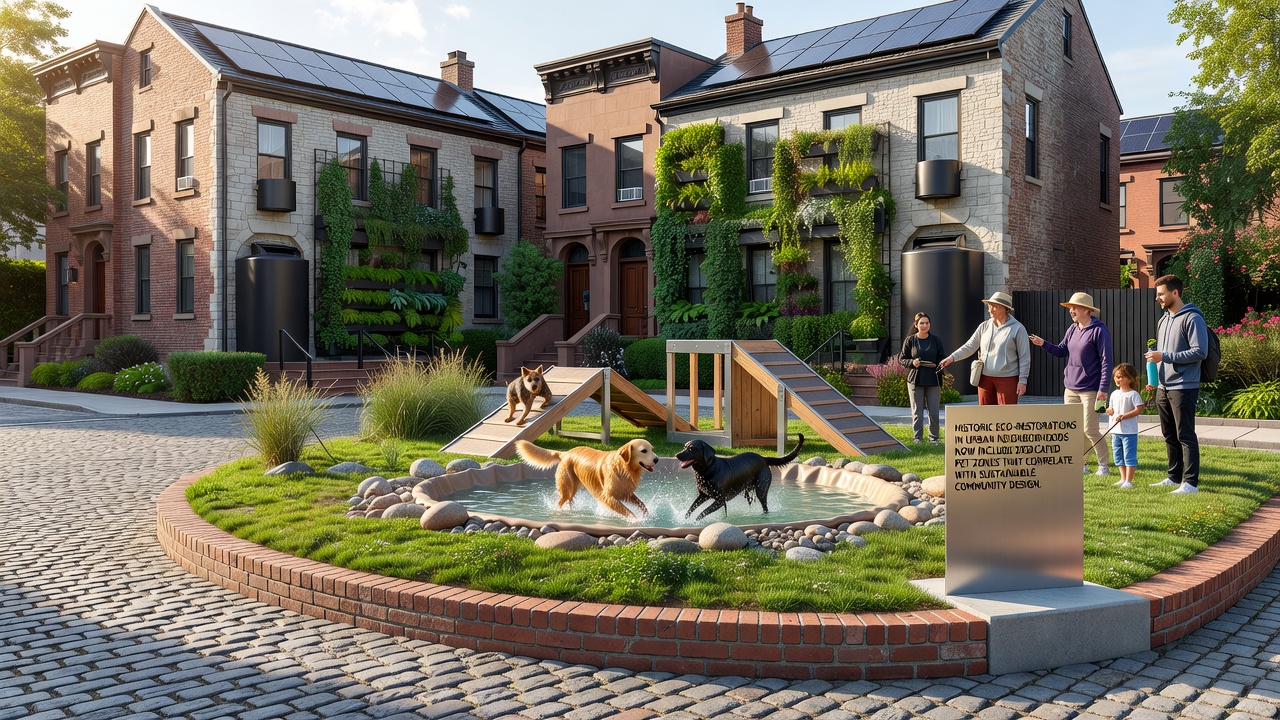
Engineers specify permeable surfacing, solar-powered lighting, and water stations connected to harvested rainwater systems so that the zones operate without additional municipal utility loads. Landscape architects integrate native shrubs that double as windbreaks and visual screens, and they position benches at intervals that encourage longer dwell times for owners monitoring heart-rate variability through smartphone apps. In one Portland district, the pet zone spans 2.3 acres within a 14-acre restoration and includes a separate agility circuit whose usage logs feed into anonymized datasets shared with local universities. Copenhagen's counterpart incorporates elevated boardwalks that protect underlying wetland hydrology while giving dogs and handlers varied terrain that correlates with increased daily step counts tracked by fitness wearables.
Wellness Data Patterns Linked to Zone Usage
Researchers at the University of Melbourne compiled three-year longitudinal data from 847 residents who received activity trackers before and after their neighborhood restoration added a pet zone, and the dataset reveals average increases of 1,850 daily steps alongside 12 percent reductions in self-reported anxiety scores on standardized scales. Parallel monitoring in Seattle neighborhoods, coordinated through the Centers for Disease Control and Prevention community health surveys, shows corresponding drops in systolic blood pressure readings among dog owners who logged at least four visits per week to the new facilities. Those patterns hold after controlling for age, income, and pre-existing exercise habits, while non-dog owners in the same blocks displayed smaller but still positive shifts in sleep duration metrics drawn from the same device ecosystem.
Case Examples From Three Cities
Portland's Reedway Eco-Corridor completed its pet-zone addition in early 2025 and recorded 34 percent higher park-adjacent property occupancy rates within six months, according to county assessor data. Melbourne's Merri Creek restoration integrated a 1.8-acre dog area that now processes 2.4 tons of composted waste annually through on-site biodigesters, and resident surveys indicate 68 percent of zone users report stronger neighborhood social ties measured through attendance at quarterly clean-up events. Copenhagen's Nørrebro Green Loop added its pet facilities in September 2026 as part of a larger climate-adaptation package, and preliminary figures from the city's open-data portal show a 9 percent decline in emergency-room visits for stress-related complaints among residents within a 400-meter radius of the new zone. Each project maintains public dashboards that update monthly with aggregated wellness indicators stripped of personal identifiers.
Measurement Methods and Data Integration
Public-health analysts combine GPS traces from collar-mounted sensors, municipal Wi-Fi connection logs at zone entry points, and electronic health-record extracts to build regression models that isolate the contribution of pet-zone access from broader restoration benefits. Funding for these integrations often flows through multi-year grants administered by the National Institutes of Health in the United States and the Medical Research Future Fund in Australia, allowing cross-city comparisons that control for climate and cultural differences in pet ownership. Observers note that the strongest statistical signals appear when usage exceeds 150 minutes per week per owner, a threshold that aligns with veterinary guidelines for canine physical activity and simultaneously supports human cardiovascular targets established by the World Health Organization.
Conclusion
Historic eco-restoration sites continue to evolve by embedding dedicated pet zones whose usage patterns align with documented wellness improvements across multiple urban datasets. The September 2026 expansions in several cities illustrate how these additions fit within existing ecological frameworks while generating new streams of longitudinal health information. Continued monitoring through established research partnerships will clarify the durability of these correlations as more neighborhoods adopt similar designs.